First impressions don’t happen in person anymore, they happen on Google. Search engines decide what people see, not you, so if you don’t control your online narrative, someone else will.
In this article, you will learn how the online reputation management tool ORM works, why ignoring it is risky, and what steps you can take to make sure your digital presence builds trust, not doubt.
Let’s get right to it.
What Is Online Reputation Management?
Online Reputation Management (ORM) is monitoring, influencing, and improving how a person, brand, or your business appears online. It’s about making sure that when people search for you, they see content that builds your credibility.
Search engines, review platforms, and social media profiles shape public perception. ORM gives you control over that narrative by amplifying positive content, addressing negative feedback, and making sure that outdated or misleading information doesn’t define you.
Unlike traditional PR, which focuses on media coverage, ORM is digital-first. It deals with Google search results, online reviews, social media conversations, and third-party content that influences your reputation.
It involves these components:
- Monitoring your online presence
- Managing customer reviews
- Controlling search engine results
- Staying active on social media
- Having a crisis plan
We will delve into each one in a bit so we can show you strategies you can apply.
Why Is Online Reputation Management Important?
Why should you take online reputation management seriously?
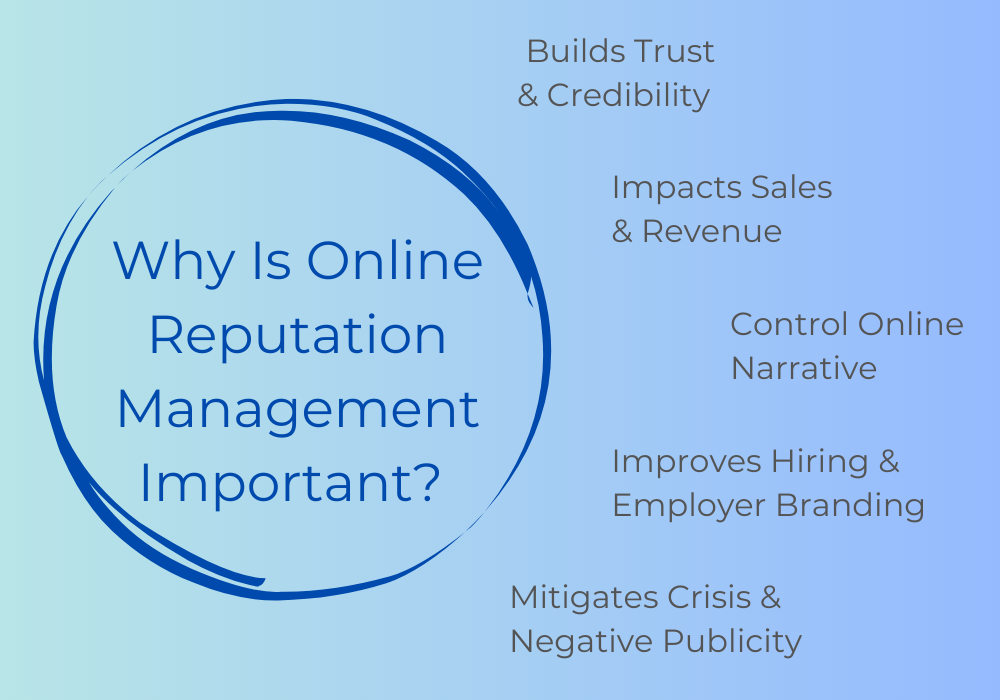
I. Builds Trust & Credibility
People trust what they see online, and 90% of consumers check reviews before making a purchase. If your positive reputation is strong, customers feel confident choosing you over competitors.
To do this:
- Encourage positive reviews
- Respond professionally to negative ones
- Create content that reinforces your expertise and reliability
II. Directly Impacts Sales & Revenue
When customers purchase, their decision often comes down to ratings and search results. People don’t just trust what you say about your business, they trust what others say. Even if your product is better than a competitor’s, a single unresolved complaint will make buyers second-guess whether they should trust you.
To do this:
- Identify where people talk about your business (Google, Trustpilot, Yelp, Reddit, or industry forums)
- Set up alerts for brand mentions
- Request reviews right after a positive experience
III. Helps Control Your Online Narrative
Your reputation is shaped by what ranks first on Google. If you’re not actively managing it, old news articles, customer complaints, or even misinformation can take the top spots. Competitors can also capitalize on negative press, using it to sway potential customers.
Here’s what you need to do:
- Google your business monthly to check page one results
- Push down negatives with expert content like blogs or press releases
- Reach out to site owners to fix outdated info
- Work with SEO experts to optimize your site and profiles to keep them ranking first
IV. Improves Hiring & Employer Branding
75% of job seekers research a company before applying, and candidates see poor Glassdoor reviews, complaints about toxic work culture, or unaddressed employee concerns can make top talent look elsewhere.
- Monitor employer review sites like Glassdoor and Indeed and respond to feedback professionally, especially negative reviews
- Encourage satisfied employees to share their experiences using video interviews
- Showcase your company culture through LinkedIn, employee testimonials, and behind-the-scenes content
V. Mitigates Crisis & Negative Publicity
Bad news spreads fast, and if you don’t get ahead of it, it can take over your brand’s story before you even respond. A single viral complaint or bad review can snowball, and if you stay silent or handle it poorly, things only get worse.
People don’t expect perfection, but they do expect honesty and action. So when you handle a crisis well, it’s not just damage control. It’s a chance to prove how credible your brand is and turn skeptics into loyal supporters.
- Have a crisis response plan before you need it
- Assign a team to handle public communication
- Respond quickly with facts and solutions
- Address concerns directly on social media, news sites, or review platforms
- Once the situation is under control, share positive updates, testimonials, or company improvements to shift the focus back to your strengths
Is Online Reputation Management The Same As SEO?
Not exactly, but they overlap.
Search engine optimization focuses on getting your website to rank higher on Google, while ORM is about shaping how your brand appears online.
ORM uses SEO strategies to push positive content higher and bury negative or unwanted content, but it also involves review management, PR, and crisis response; things SEO alone doesn’t cover.
So while SEO helps with your brand’s reputation, ORM is a bigger-picture strategy focused on trust, reputation management companies and credibility, not just rankings.
How Does Online Reputation Management Work?
Online reputation management shifts the balance of what ranks online in your favor. Search engines don’t judge what’s true or fair, they rank whatever gets the most traction.
Here’s how it works and what you need to do:
1. Monitor your online presence on Google your business weekly, set up Google Alerts, and use tools like Brand24 to track reviews, social media mentions, and news articles.
2. Respond to good and bad customer feedback. Reply to complaints professionally and publicly, offer solutions, and encourage happy customers to leave reviews on Google, Yelp, and industry-specific sites.
3. If negative content is ranking high, you need to push it down with better content and then use SEO techniques to help it rank higher than outdated or harmful information.
4. Stay active on social media. Post regularly, engage with your target audience, and address concerns quickly to show you are present and accountable.
5. Prepare a response plan in advance, designate a spokesperson, and be transparent when addressing issues so you stay in control of the narrative.
ORM isn’t a one-time fix, it’s an ongoing process. The more effort you put into building a strong online reputation now, the less damage control you’ll need later.
5 Key Elements Of An Effective ORM Strategy + Examples
Reputation management is about making sure the right assets dominate your search presence. Many businesses assume that responding to reviews is enough, but without strong digital assets, you are playing defense. Pay close attention to how you can apply these elements.
1. Active Reputation Monitoring
The first step in any ORM strategy is knowing what is said about you in real-time. If you don’t track conversations, reviews, and mentions, you are always reacting too late. Use reputation monitoring tools to stay ahead of potential issues before they turn into real problems.
For example, when United Airlines faced a viral backlash after forcibly removing a passenger from a flight, they initially failed to gauge the scale of public outrage, responding with a dismissive statement.
They could have issued a stronger response early on, preventing long-term damage.
On the other hand, in 2016 a guest tweeted about racial discrimination on Airbnb after repeatedly being denied bookings. Instead of waiting for backlash, Airbnb acted fast, launched an internal review, and worked with civil rights groups to address the issue. They introduced the “Open Doors” policy, anti-bias training for hosts, and design changes to reduce discrimination.
They reach out, acknowledge the issue, and offer a resolution to turn a potential crisis to show how accountable your brand is.
2. Shaping Search Results For Brand Control
Google’s first page is about real estate control. If negative press ranks in the top 3 results, users won’t even scroll further before forming an opinion. Even if the issue was resolved, the damage lingers because Google prioritizes engagement, not fairness.
A great example of search result management is Warren Buffett. Despite being one of the world’s most scrutinized billionaires, his name pulls up interviews, thought leadership articles, and philanthropy news, not scandals or controversies because Buffett’s team consistently publishes content that reinforces his legacy, keeping it ranked above anything negative.
Another example is Domino’s Pizza. After struggling with quality complaints, Domino’s didn’t just release a statement, they created a full marketing campaign, “Oh Yes We Did,” addressing criticism head-on while highlighting improvements. This strategy made sure that when people searched for “Domino’s Pizza reviews,” the results weren’t just old complaints but new content that showed their commitment to change.
The same principles apply to brands that serve vulnerable populations. This medical alert brand (Bay Alarm Medical), for instance, made sure that when people search for reviews on medical alert systems, they find real and detailed customer reviews on the Google Knowledge Panel so that high-authority content dominates search results, making it harder for outdated or misleading information to take over.
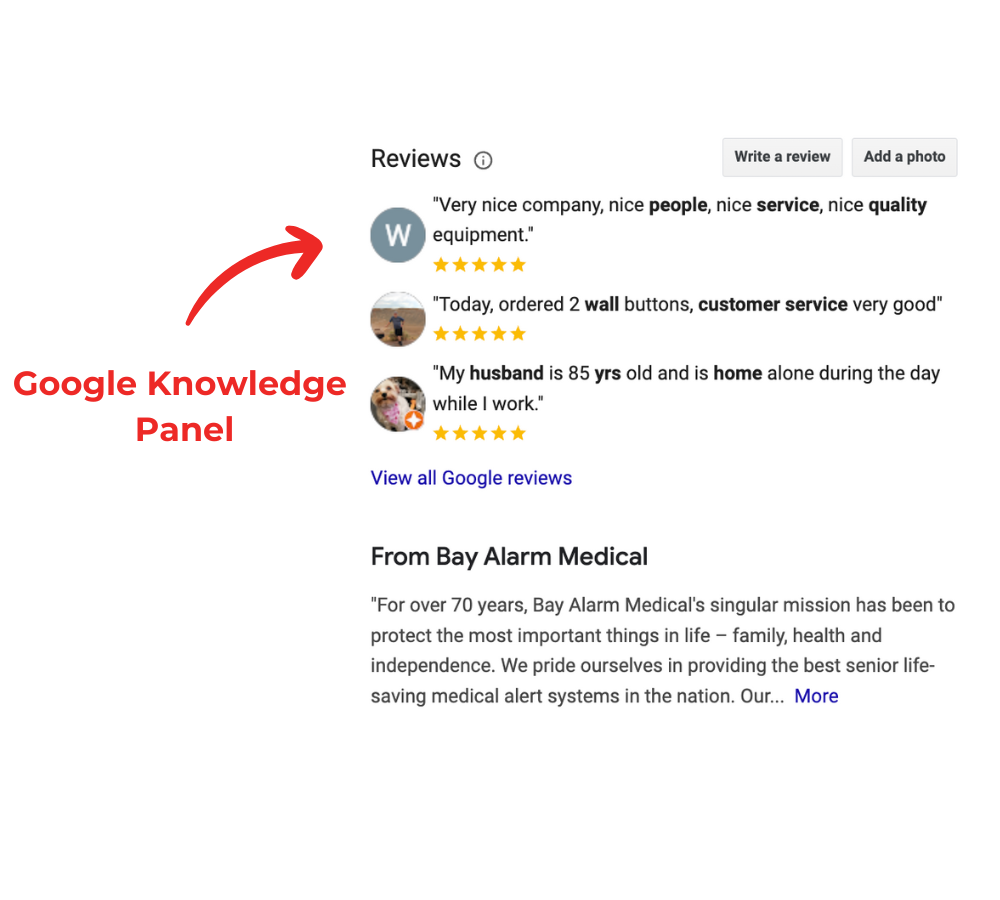
Flood the first page with high-authority content that tells your story on your terms.
3. Reputation Recovery & Crisis Handling
Every brand makes mistakes, but the ones that survive and thrive are those that handle them correctly. If you handle it poorly, the narrative gets shaped by public outrage.
ORM isn’t just about avoiding bad press; it’s about controlling the damage and rebuilding trust when things go wrong.
Take the case of KFC in the UK. When a supply chain failure caused a nationwide chicken shortage, customers were furious. But instead of issuing a corporate apology, KFC took a humorous, self-aware approach. They ran a full-page ad showing an empty chicken bucket with the letters rearranged to say “FCK.” This response turned a disaster into getting back public favor.
On the other hand, when BP faced the Deepwater Horizon oil spill, their ORM strategy failed. The CEO’s dismissive statement, “I’d like my life back,” overshadowed their cleanup efforts, making the crisis worse.
The takeaway? Handling a company’s reputation in crisis requires empathy, transparency, and the right messaging fast.
Good crisis management includes stopping issues before they happen. Make sure your website is fully secure so users can share their information without worrying about identity theft.
4. Leveraging Social Proof & Advocacy
One of the most powerful elements of ORM is turning satisfied customers into public advocates. No matter how good your marketing is, people trust real user experiences more.
Nike excels at this when they partner with athletes, influencers, and everyday users to share their brand story. They amplify positive customer experiences using user-generated content so that when someone searches for Nike, they see real people praising their products, not just corporate marketing.
Here’s another great example from this fitness supplement brand. They made sure that when people look them up, they see real customers loving their products, some even get featured on their Instagram, and the posts get lots of interaction.
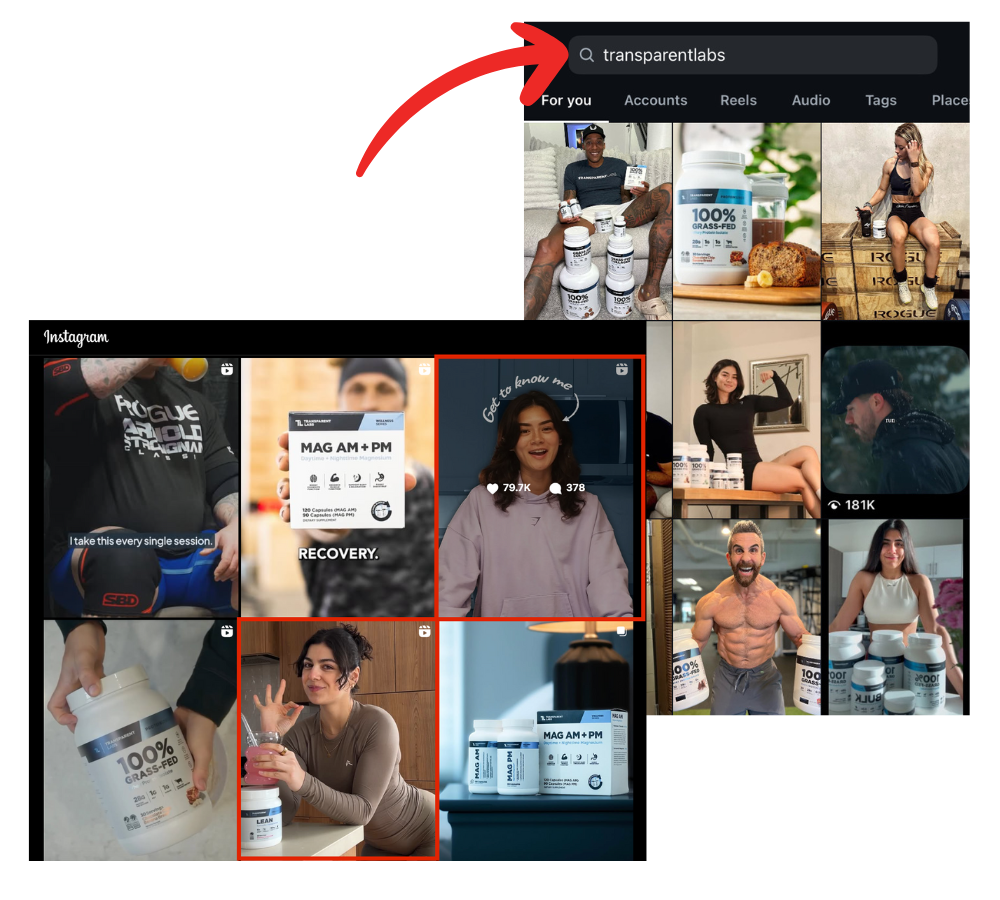
The lesson? Fill search results with voices that matter: athletes, influencers, and everyday users to have content that feels real, so your brand looks trustworthy and relatable instead of just another company pushing a message.
Step-By-Step Guide On Taking Control Of Your Online Reputation
Ready to get started? Here are the steps you need to take.
Step 1: Audit Your Current Online Reputation
Before you can improve your reputation, you need to understand what is already out there. Assess how your brand appears in search results, on social media, and across review sites.
Here’s what you need to do:
- Google your name or business and check what shows up on page 1
- Scan social media platform, review platforms, and news articles to see how people talk about you
- Identify negative content, outdated information, or gaps where you need to improve how your brand appears online
Step 2: Set Up Reputation Monitoring Tools
At this stage, think about where people mention your brand the most. Is it in reviews, social media, or news articles? Also, consider how often you need updates and whether you want real-time alerts or just a big-picture view to catch potential issues early.
Here’s what you need to do:
- Set up Google Alerts to keep tabs on your brand name, key people, and products so you know when something new pops up
- Try ORM tools like Brand24, Mention, or Reputology to track reviews and online conversations as they happen
- Have someone on your team check mentions every week so you can respond before small issues turn into bigger problems
A budget-friendly way to manage your reputation is by creating content on platforms that come with built-in audience insights. Take Classic Guitar Shed, for example, they run a website for beginner guitarists but also use their YouTube channel not just to offer free lessons as a teaser for their paid courses, but to track target audience feedback and engagement in real-time.

Step 3: Address Negative Content & Reviews
Search engines treat engagement as a ranking signal, so when a negative review or article gets attention and no counter-content exists, it cements itself at the top of search results. You need to dilute its impact by driving interactions on more favorable content.
Here’s how to take control:
- Acknowledge concerns, offer a fix, and take the conversation offline when necessary
- Submit content removal requests to Google or contact the site owner for corrections when you find false information
- If defamatory content is harming your business, consult a legal expert to explore takedown options
Step 4: Create & Promote Positive Content
If negative results stick around on search engines, it’s a sign that there isn’t enough authoritative content competing for those top spots so you need to place high-value content on platforms Google already trusts: media outlets, industry blogs, and high-ranking, social media channel management profiles, to naturally outrank negativity.
Here’s your action plan:
- Write and optimize blog posts, case studies, and press releases that show why people should trust you
- Feature customer testimonials and success stories in written and video formats to build trust
- Publish guest articles on industry sites to gain backlinks and improve search rankings
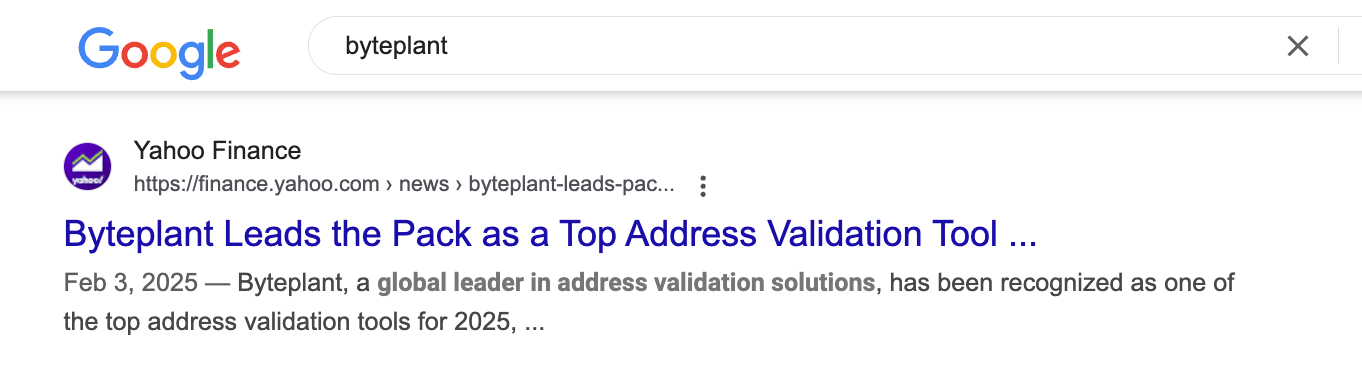
Here’s an excellent example from Byteplant. They proved their expertise by getting featured in respected industry media. They collaborated with Yahoo Finance and other niche web platforms to position themselves as trusted data quality experts.
Step 5: Leverage Social Proof & Influencers
Social proof is about placing endorsements where they have the most influence. A testimonial buried on your website won’t move the needle, but a high-rating Google review, a LinkedIn recommendation from an industry leader, or a product mention in an influencer’s YouTube video can shift public perception instantly.
Influencers also work best when they align with your audience’s trust signals. The key is making sure that these endorsements don’t look staged, so choose voices that already carry credibility in your space.
Here’s how:
- Ask happy customers for reviews on Google, Yelp, or industry-specific platforms
- Partner with micro-influencers or industry experts to share authentic content about your brand
- Run testimonial campaigns or feature customer success stories on social media
Step 6: Build A Strong Brand Presence
If your brand isn’t showing up consistently online, Google and customers will rely on whatever content is already out there, including outdated or negative links and information.
Here’s how to avoid this:
- Publish 2-4 blog posts monthly, company news, and key pages
- Own your social media real estate. Stay active on LinkedIn, Twitter, Instagram, or industry-specific platforms where your audience engages
- Make sure your messaging stays consistent on your website, social profiles, and media mentions to reinforce the same brand story
- To free you up for crucial decision-making responsibilities, hire a social media manager
Step 7: Have A Crisis Management Plan
A bad review is manageable, but when a negative story gains traction, it can permanently shift public perception. Make sure your side of the story reaches the right audiences before the narrative is set in stone.
Here’s what you need to prepare:
- Train your team to handle negative PR, social media backlash, and public complaints
- If a crisis occurs, acknowledge mistakes if needed, and outline corrective actions
- Keep customers updated with public statements and follow-ups
Common ORM Mistakes & How To Avoid Them
This is easy to overlook, but if left unchecked, it can create serious headaches later
Mistake 1: Focusing Only on Google Rankings, Not Search Intent
Understand why people are searching for your brand. If most searches are about a lawsuit, bad reviews, or complaints, publishing generic blog posts won’t help. Instead, create content that directly addresses concerns like a public statement, and FAQ page explaining the situation.
Mistake 2: Ignoring Branded Autocomplete Suggestions
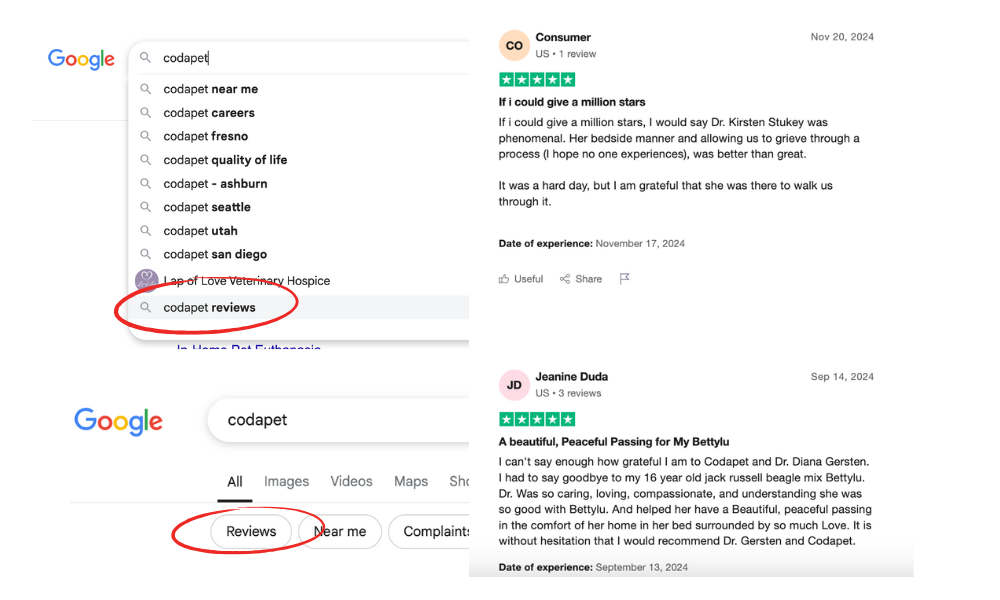
When people start typing your brand name into Google, autocomplete suggestions can make or break their first impression. If negative search results have terms like [Brand] scam, [Brand] complaints, or [Brand] bad reviews, it shows that both users and search engines find these topics are very relevant.
Generate search interest around positive brand-related queries to counteract the negative terms. Launch PR campaigns and create efforts to encourage users to leave positive reviews targeting positive keywords to drive searches for terms like [Brand] success stories, [Brand] customer experiences, or [Brand] reviews.
Here’s a great example from CodaPet. They discovered that potential clients value reviews when choosing a service. CodaPet actively encourages clients to share their positive experiences and this makes their service more trusted and accessible.
Mistake 3: Letting AI-Generated Content Represent Your Brand
Use AI to draft content, but always edit responses to sound human, personalized, and brand-consistent. When it comes to crisis responses or sensitive issues, always have a real person handle the messaging.
Mistake 4: Deleting Or Hiding Negative Reviews
Scrubbing negative reviews without addressing the issue can backfire, making your brand look dishonest. Instead, reply in a way that proves you are listening and willing to fix the issue and, if needed, offer to resolve the issue privately. If a review is fake or defamatory, report it to the platform, but don’t assume every bad review should be removed.
Conclusion
Managing your online reputation is an ongoing process. Stay proactive and make sure the right story about your brand gets seen.
The more you monitor and refine your digital presence, the less you will have to worry about damage control. Diib.com can help you keep track of how your brand appears online, so you can stay ahead of potential issues and focus on building long-term trust. Start tracking your brand’s online presence today.