If there’s one truth you need to know in your online business efforts, it’s that you won’t succeed unless you maximize your SEO.
When it comes to inbound marketing, 61 percent of product owners focus on SEO above all. It’s a plain fact that ignoring SEO is ignoring potential sales.
Performing an SEO audit can help get you back on track.
What is an SEO Audit?
The SEO audit meaning is an evaluation of your site, grading it based on its ability to rank highly on Google.
It’s not unlike a report card.
You might have a responsive, informative, and well-designed website. But if search engines can’t understand it, they won’t index it, and new readers won’t find it.
FACTS: 68% of online experiences begin with a search engine. And 90.63% of pages get no organic search traffic from Google at all. (Ahrefs)
An SEO checker will give you a quick score, but it’s not going to tell you everything a detailed SEO audit can. With a full website audit checklist, you can develop a plan that allows you to:
- Compare your site to the competition
- Identify weak points and how to improve them
- Understand your website’s SEO efficiency
- Set expectations for your business’ future
You probably won’t make your website perfect overnight, but you can keep adjusting your goals as you grow.
Here’s what you should focus on during an audit.
How to Conduct SEO Audit: Key Elements
Before you can change anything, you need to do some research to back up your strategy. There’s almost no limit to what you can do with an audit to adapt your website.
For example, you can optimize technical aspects, analyze keywords, and much more.
Of course, most people who audit their sites want to improve their rankings. Everyone wants to be number one in a sea of tens of thousands of results. The only way to get to that number one ranking means nailing the elaborate formula that is SEO.
Let’s first talk about boosting your technical SEO.
Boosting your technical SEO
With the right tools, you can start your audit without much effort. One such useful tool is Screaming Frog SEO Spider.
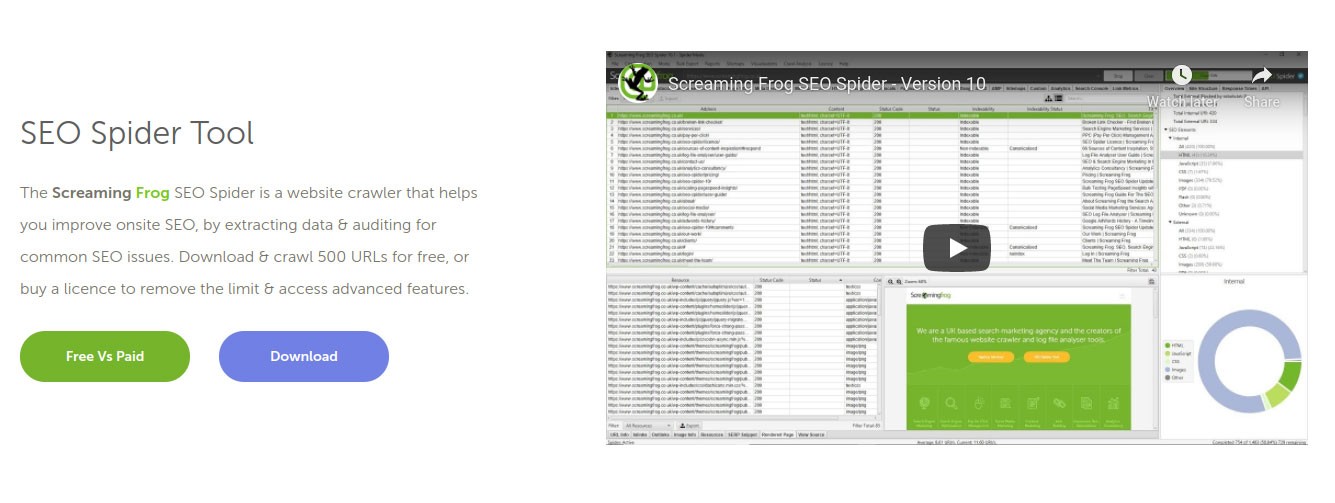
Even the free version comes with plenty of useful features for an SEO audit meaning you can start without paying a dime.
Start off by running a quick Penguin and Panda check.
How to: Run Penguin and Panda SEO Audit
Penguin and Panda are the names of Google algorithm updates. The intent is to better serve high-quality, authoritative websites and rank them higher.
The Penguin update concerns the natural origin of links on your website, and the Panda update focuses on banners and content.
To do a Penguin check, you can use Majestic’s Site Explorer to examine your backlinks and if there are malicious or otherwise questionable origins linking your company.
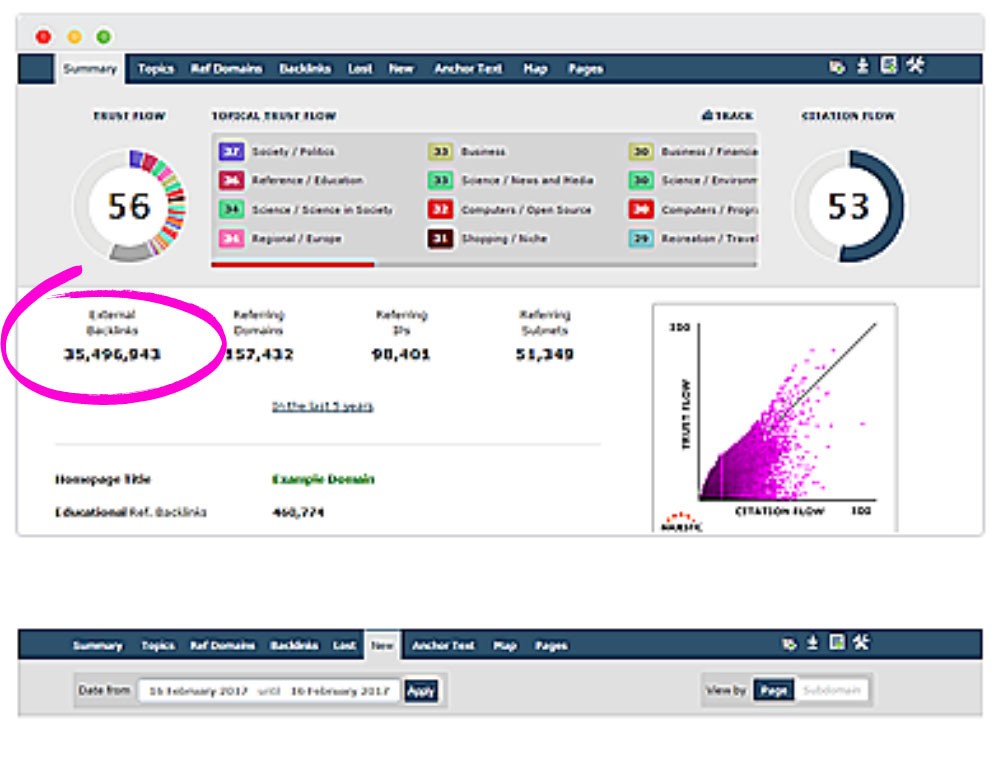
If there are, use the Google Search Console to disavow those sites.
To do a Panda check, look at your website. Are there banners covering up your content?
If so, remove some of them. Nobody needs to see several banners before they scroll.
The next part of your technical SEO audit focuses on page titles.
[post_cta_seo]
Page titles
Page titles underscore the topic you write about. They should also end with some kind of branded phrase, like your business’ name or tagline.
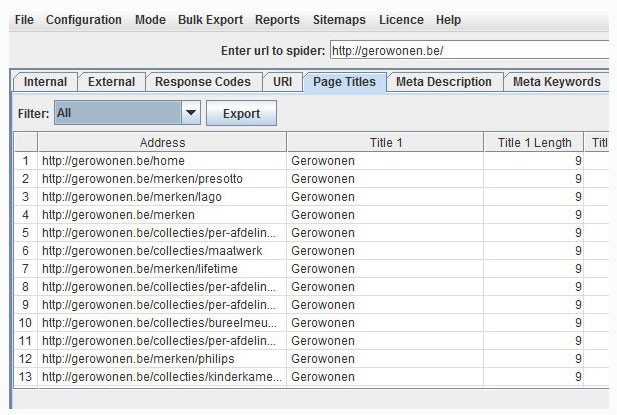
Screaming Frog can help you analyze and change page titles. Be sure to check for duplicate or absent page titles too. Either way, sprinkle in brand wherever you can. Here is what that page looks like:
(Image credit: Webdesign)
Once you’ve sorted your technical SEO, it’s time to audit your local SEO.
How to Conduct an SEO Audit: Local SEO
As far as organic traffic is concerned, local SEO is your business’ livelihood.
If local users can’t easily find your website, they’re not buying what you’re selling. It also means your local SEO is in dire need of improvement.
Local users are highly motivated with a target in mind; attracting them will lead to a jump in conversions.
Before the website audit checklist
Starting a local SEO audit requires understanding how SEO audit preparation optimizes your chances at improving your ranking. Before you audit, make sure you:
- Check your business’ visibility. Can users see your name, address, and phone number?
- Study your business’ geographical location. Understand the city culture.
- Dive deep into your business’ website, blog, or Google My Business listing.
- Gather useful data from your competitors.
FACT: 97% of people learn more about a local company online than anywhere else. (Blog Hubspot)
How to Audit a Site for SEO: Keyword Analysis and Research
You can get results relying on search engine marketing to bring in new customers, but that will take time.
Marketers can leverage search engines to reach their target audience. Regalix notes that 96 percent of marketers rely on search engine marketing. In other words, you’re hardly alone.
FACT: 60% of marketers say that inbound (SEO, blog content, keywords etc) is their highest quality source of leads. (Ahrefs)
If you want to stand out, you need to hone in on keywords to start your local audit.
Keywords are the muscle of your business’ website. They are the foundation of all viable SEO strategies, so you should give them first priority.
If you don’t know your keywords, you don’t know which ones aren’t performing well. Then you have no basis on which to base a viable strategy.
Analyzing keywords
Even though Google doesn’t weigh keywords as heavily in its algorithms, the best organic ranking decisions still stem from thematic keywords.
Here is one way to conduct a keyword analysis using SEMrush:
- On the home page, enter your URL (applegatedeveloper.com) and hit Enter. You’ll see your organic keyword results.
- Pay special attention to how these keywords currently rank. Then you can check which of your competitors rank better for those keywords.
- Finally, let’s adopt this to a local SEO audit. The goal is to find local businesses competing for the same keywords you are. Both paid search and organic results count.
- In keeping with our example, you would now enter “real estate developer in Applegate.”
Do you really need a local listing? As long as your competitors run Google ads consistently, chances are good that local customers use these keywords.
As we mentioned before, local customers are highly motivated with a target in mind. They’re more likely to respond to a call to action.
FACT: 78% of location-based mobile searches result in an offline purchase. In fact, “near me” or “close by” type searches grew by more than 900% over two years. (Blog Hubspot)
How to Conduct SEO Audit: Checking your Business Listing
One of the most manageable parts of a local SEO audit is checking how visible your local listing is on Google.
There must be an alignment between your business and your search results. The goal is to link the characteristics of your business with organic search results.
Users looking for a service often don’t care much about the business when it’s not in their geographic location.
If a customer in Applegate wants to build a house, they don’t want to know about a real estate developer in Blueville. They want a developer in Applegate.
If you’re a real estate developer in Applegate, that’s precisely the kind of customer you’re looking to reach with your website.
Your next step is to enter your company name in every search engine, starting with Google. Be sure to search with the formula “company name + location.”
For example, “Big House Real Estate Developers + Applegate” could return local listings with the knowledge graph. Google will also add the website to this listing if it recognizes the business name.
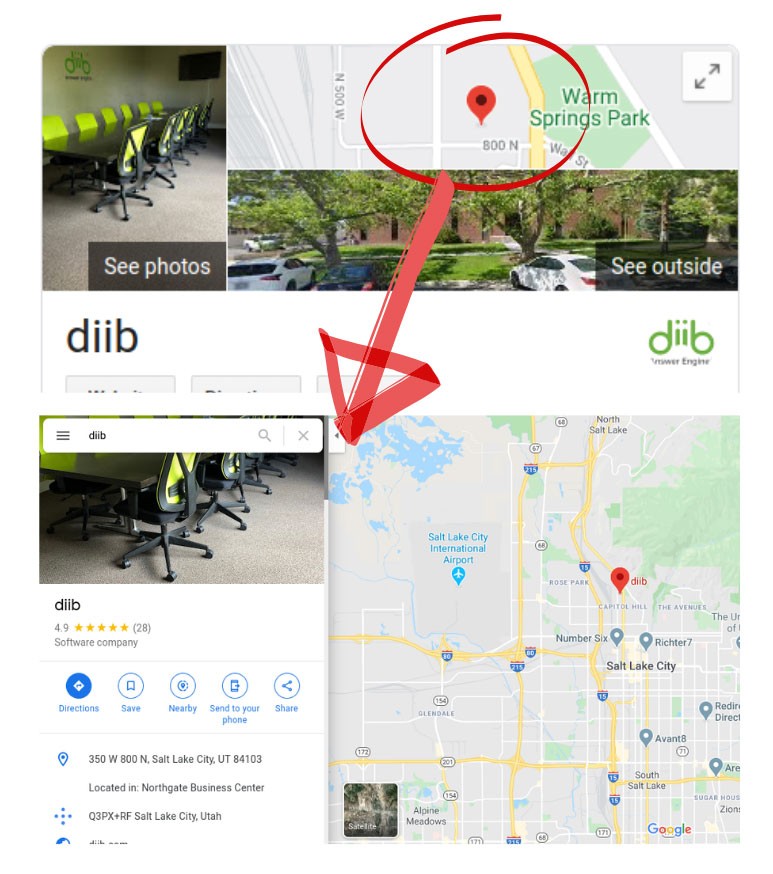
Next, is your business name attached to a Google+ profile? It’s essential that a local listing displays a Google+ page link because it influences your local reach. Customers want to reach a company by their preferred means, which gives them an additional avenue. Google My Business is free and one of the preferred means of reaching your potential customers with little effort. Your Google My Business profile page would look like this to searchers, complete with a map and photo of your location:
Benefits of a Google My Business Listing
Local search users often seek a business using branded keywords. Claiming your Google My Business listings will benefit you in terms of branded local searches.
There are three benefits to having a Google My Business listing:
- Your business appears in local search results
- You develop long-term relationships with your preferred audience members
- You provide accurate information about your company and services with potential customers
Claiming your GMB listing allows Google to sync your company with the knowledge graph, helping local searchers learn more about the products and services your business provides. This solves many of the problems borne from unproductive branded local searches, proving how SEO audit can benefit your conversions.
Checking for Duplicate Content
Before you remove every instance of duplicate content from your site, understand this: The only duplicate content Google penalizes is unproductive spam.
In fact, Google even says so in its Help Center. Non-malicious duplicate content, such as the following, will not cause your business to suffer:
- Store items linked or displayed using multiple distinct URLs
- Printer-only versions of a web page
- Discussion forums that generate stripped-down and standard versions of the same pages
Google doesn’t want to get rid of this duplicate content.
What you can do is tell the Google spider which pages it should index. Otherwise, the spider won’t know which of the URLs should appear in SERPs. SEO.co further discusses Google’s view on duplicate content.
As long as you employ canonicalization in your URLs, you should be fine. This will tell Google which URL should take a more significant priority.
Reviewing Your Social Media
Nurturing your social signals is another powerful move you can make for improving your local SEO.
Social factors like reviews and ratings can influence other aspects of the algorithm. Studies prove social signals impact local SEO and organic search results both directly and indirectly.
Direct influence comes from:
- How many people like your Facebook page
- How many people share your Facebook posts
- How many Twitter followers you have
- How many tweets link to your site or mention your brand
- How many businesses add your Google+ page to their circles
Indirect influence comes from:
- Improved online visibility leading to increased citations and inbound links
- Happier customers leading to more positive reviews on Yelp, Google Local, and other sites
- Decreased bound rate, more repeat visitors, and more time spent on your site
If your social influence is lacking, it’s time to optimize or rebuild it. If some of your pages are doing well while others aren’t, you can either update the existing ones or start them over.
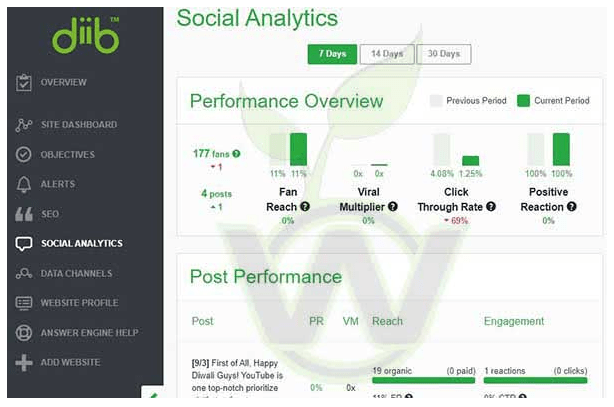
Being active on social media platforms helps your business locally. It’s not that Google cares about the links you share on Facebook, but companies that can generate discussion among lots of people are valuable. Diib® offers social media analytics which can give you information such as: customer demographics, best time of day to post, which posts are most effective ect. That page looks something like this:
Link Building
Google keeps its exact algorithm a closely-guarded secret, so we’ll never know the details of the formula.
Despite this fact, a 2015 Moz survey reveals most in the SEO community believe Google still weighs links heavily in its algorithm.
Link building is, therefore, an essential aspect of how to conduct an SEO audit.
[post_cta_second]
Do a Brand Citation Check
Marketing your brand goes far beyond improving your search rankings and local SEO campaign. You also need to satisfy your customers and make a positive difference in the community. In fact, consumers are more likely to choose a company with their shared values over a company with differing ones.
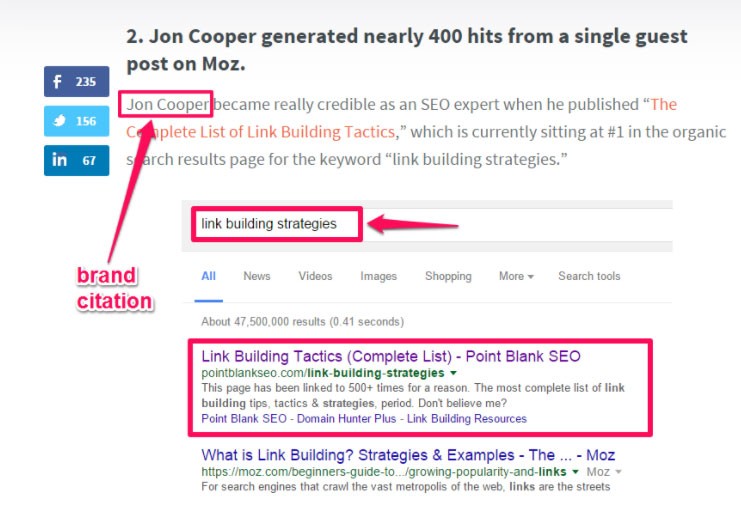
Brand citation is when another website mentions your company, personal name, or website without linking to your social media or website. This example will help to illustrate brand citation:
(Image credit: Neil Patel)
Why do these matter? Let’s quickly run through the main benefits of brand citations:
Social Signal Leverage
You can leverage your social signals with brand mentions.
Even though the links acquired through social media are no-follow, meaning it won’t impact your search rankings results or your local SEO campaigns, you can still piggyback onto comments, tags, and similar social mentions. From there, you can reach out and request a do-follow link from whoever cited your website.
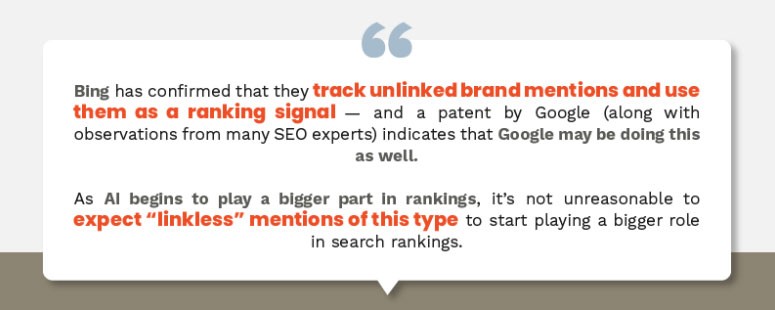
Citations are a sign that people can find your small business. You won’t get them unless you create the kind of value that people want to talk to others about.
(Image credit: Fractl)
Everything starts with your business’ primary goal. From there, it goes on to the content you build to reach your goal. The more value you offer to the community, the more visible you become and the more likely others are to cite you.
Implied links and brand citations may well be the future of link building. That’s the number one reason you want to see what kind of quotes your brand already gets and scale it up.
Effectively Measure your Brand Authority
Google uses brand citations to determine how reliable a company or blog is.
Black hat SEO manipulations forced Google to adjust its algorithms to render the traditional link-building methods unfeasible. However, when authority sites mention a brand, it still tells Google that people trust that brand and like it.
Makes Link Manipulation Less Likely
Unlike anchor texts, branded implied links are more accessible for you to control. Citations on industry blogs tend to be relevant and naturally woven into the content where it makes the most contextual sense.
Provided your site is linked in context with the content, that link will be search-friendly.
Local SEO Benefits Greatly from Brand Citation
As long as you, your customers, or your target clients live in a particular geographic area, you will benefit from a local SEO campaign.
Citations are a crucial factor for local SEO because they play a significant role in placing a local business amid the search and social sphere. Customers can then find your business more quickly when they’re searching for something local.
How to Audit a Site for SEO: Brand Link Analysis
User experience is essential to how to SEO audit, but links are still crucial to helping you rank on SERPs. Without enough of the right links pointing toward your company site, you’ll struggle to improve your search rankings performance or see results in your local SEO campaigns.
How healthy are your current backlinks? Nobody wants to spend the time it takes to clean up hundreds of links from spammy websites. Therefore, it’s good to regularly analyze your backlinks to make sure Google will not penalize you.
Moz offers a Link Explorer tool that calculates the spam score of all your backlinks. This quick score gives you a sense of whether you need to change some links to no-follow. Here is that page:
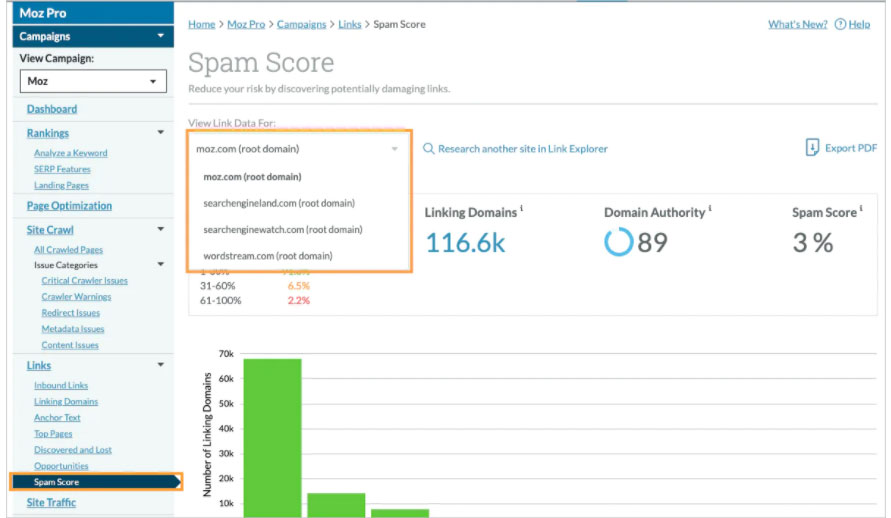
According to Link Explorer, Google penalized 4 percent of websites with a spam score of 3. If your company generates a score of 3, it’s time to do some work.
Finally, are your anchor links organic and natural? If there are too many commercial-sounding words in your anchor texts, Google may think your anchor texts are exceedingly optimized.
The end result? You guessed it: penalties!
Diib®: Making the Most of Your SEO Audit
Make no mistake: SEO has enormous potential for your company, provided you take advantage of it correctly. Diib offers a 60 second site analysis that can give you almost any analytical information you could want for your website. Whether you’re looking to enhance your content, refine your technical SEO or up your backlink game, Diib can help. Here are some of our most popular features:
- Bounce rate monitoring
- Post performance
- Broken pages where you have backlinks (404 checker)
- Keyword, backlink, and indexing monitoring and tracking tools
- User experience and mobile speed optimization
Click here for your free scan or simply call 800-303-3510 to speak to one of our growth experts.
FAQ’s
A good SEO audit checks for any site errors and helps you discover anything that needs attention or fixing on your website. This can help to boost your site ranking and overall visibility.
Some of the most important reasons for performing an SEO audit is in identifying your strengths, weaknesses and the overall potential of your website in the short term and long fun. This SEO audit will help you identify the technical problems with your website that are restricting search engines to crawl through your site or understand content.
SEO tools help your website to rank higher on Google, be more user and mobile friendly and easier to navigate. They offer insights into backlink health, keywords and into your competition.
The cost of a professional technical SEO site audit typically starts at around $5,000, but this depends on how deep or complex your business wants to go. Depending on depth and size, it can range anywhere from $3,000 all the way up to $30,000.